Request a Free Estimate
We don't just manage your pond or lake; we transform it into a beautiful, thriving ecosystem. It's what we love to do.
Invasive Aquatic Plants in Colorado
Colorado's lakes and ponds provide valuable habitat for wildlife while supporting irrigation, recreation, stormwater management, and beautiful landscapes. From private ponds and HOA lakes to golf course water features and municipal reservoirs, healthy aquatic ecosystems are essential throughout the state.
Unfortunately, invasive aquatic plants in Colorado continue to threaten these valuable water resources. Once established, invasive vegetation can spread rapidly, reduce water quality, outcompete native species, and interfere with fishing, boating, irrigation, and other recreational uses.
Understanding the most common invasive aquatic plants in Colorado is the first step toward protecting your pond or lake.
Eurasian Watermilfoil (Myriophyllum spicatum)
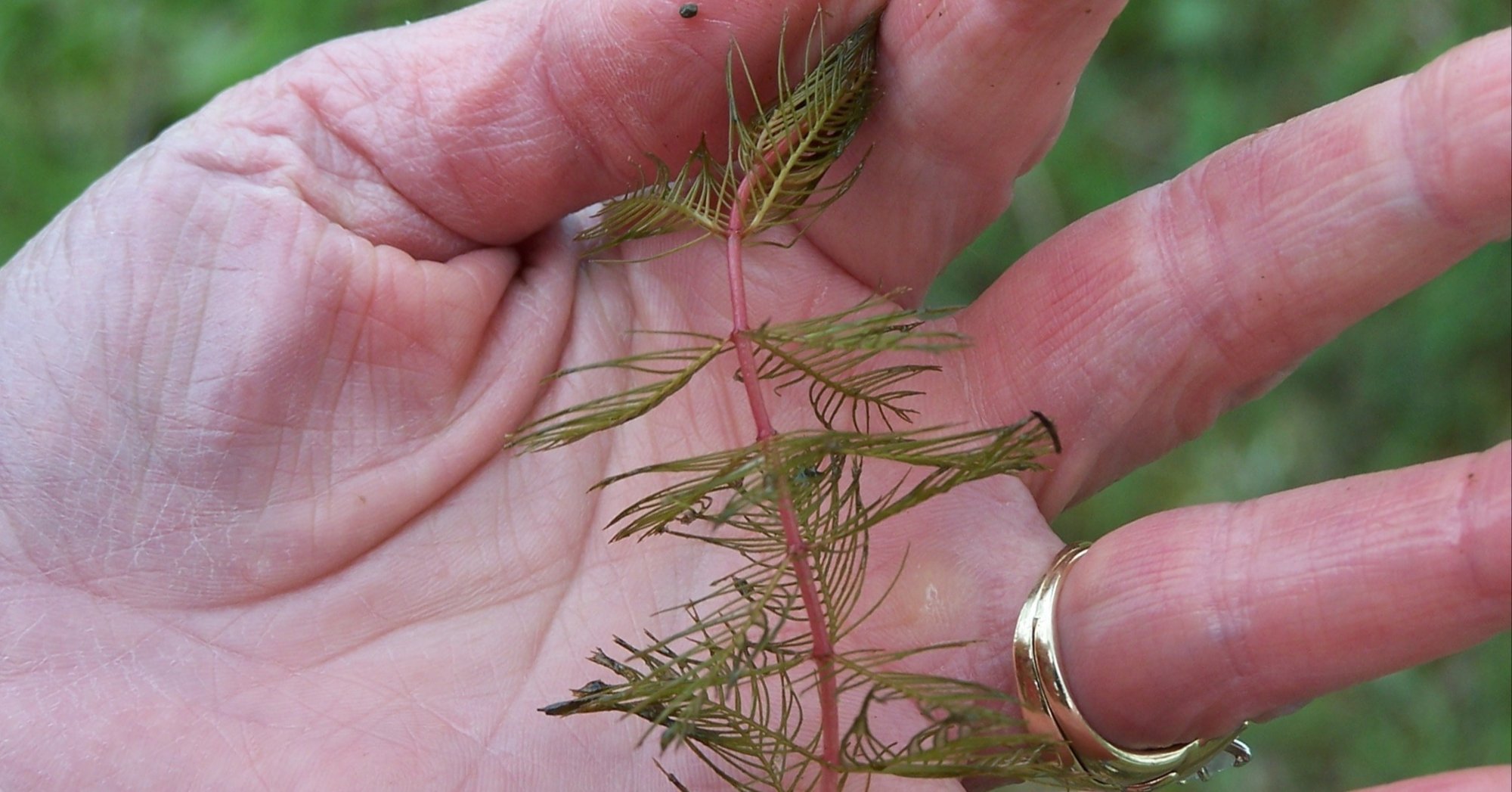
Eurasian Watermilfoil is one of Colorado's most widespread invasive aquatic plants. This submerged species grows rapidly, forming dense underwater mats that crowd out native vegetation and disrupt healthy aquatic ecosystems.
Because it spreads through small plant fragments, boats, trailers, and maintenance equipment can easily transport it from one waterbody to another.
Eurasian Watermilfoil identification:
Feather-like leaves arranged in whorls
Soft, finely divided foliage
Dense underwater growth reaching the surface
Routine lake inspections and professional aquatic vegetation management help prevent Eurasian Watermilfoil from becoming established.
Curly-Leaf Pondweed (Potamogeton crispus)
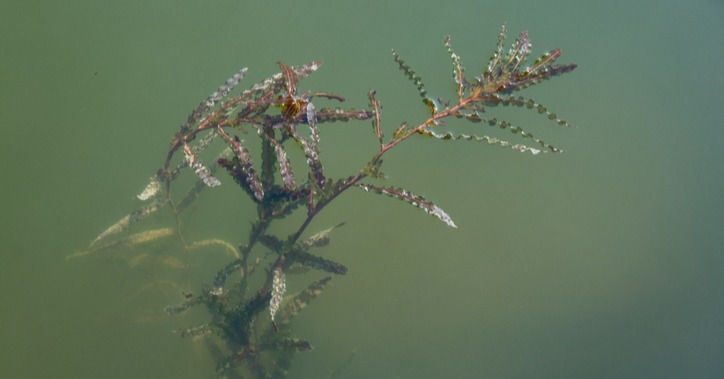
Curly-Leaf Pondweed is another invasive aquatic plant commonly found in Colorado lakes and ponds. Unlike many aquatic weeds, it begins growing early in spring, allowing it to outcompete many native aquatic plants before summer.
As the plant dies back in early summer, it releases nutrients that can contribute to algae blooms and declining water quality.
Common characteristics include:
Wavy, crinkled leaf edges
Reddish-green underwater stems
Dense patches in shallow water
Early-season management is often the most effective approach for controlling Curly-Leaf Pondweed.
Purple Loosestrife (Lythrum salicaria)
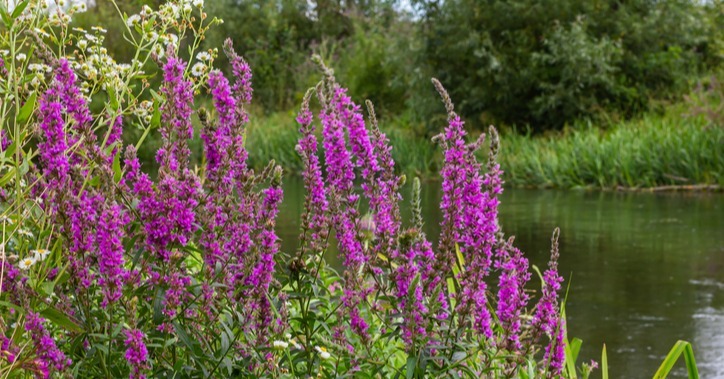
Purple Loosestrife is an invasive shoreline plant that invades wetlands, pond edges, lakeshores, and drainage areas throughout Colorado. While its tall purple flowers appear attractive, the plant spreads aggressively and replaces native wetland vegetation.
Large infestations reduce biodiversity and negatively impact wildlife habitat.
Warning signs include:
Tall flowering spikes with bright purple blooms
Dense shoreline colonies
Rapid spread through seeds and root systems
Managing Purple Loosestrife early helps preserve healthy shoreline ecosystems.
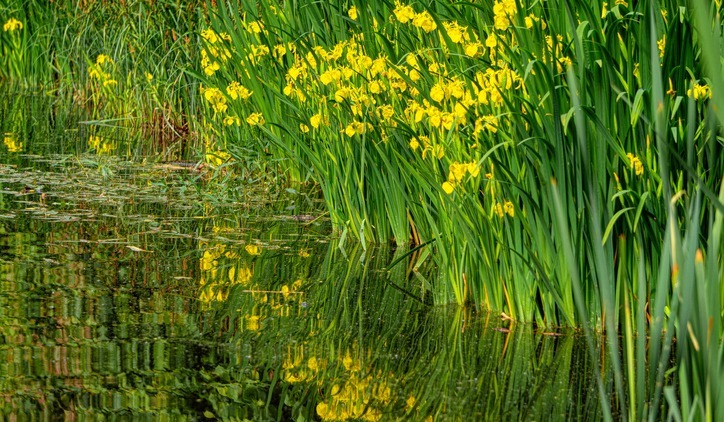
Yellow Flag Iris (Iris pseudacorus)
Yellow Flag Iris is an invasive wetland plant increasingly found along Colorado shorelines and drainage channels. It spreads through seeds and underground rhizomes, creating dense colonies that displace native vegetation.
Its thick root systems can restrict water flow and make shoreline maintenance more difficult.
Common impacts include:
Crowding out native shoreline plants
Restricting water movement
Reducing wetland biodiversity
Increasing long-term management needs
Regular shoreline monitoring helps identify Yellow Flag Iris before it becomes difficult to control.
Why Proactive Management Matters
Colorado's reservoirs, irrigation ponds, golf course lakes, and stormwater ponds all benefit from early invasive species management. Left untreated, invasive aquatic plants can:
Reduce water quality
Increase nutrient accumulation
Interfere with irrigation infrastructure
Limit boating, fishing, and other recreational activities
Displace beneficial native vegetation
Increase long-term maintenance costs
A proactive lake and pond management program allows invasive plants to be identified and treated before they become widespread.
Protect Your Colorado Lake or Pond
Whether you manage a private pond, HOA lake, golf course, municipal waterbody, or commercial property, routine monitoring and early intervention provide the best protection against invasive aquatic plants.
Aquatics Associates provides comprehensive lake and pond management services throughout Colorado, including:
Aquatic vegetation monitoring
Invasive aquatic plant identification
Targeted aquatic herbicide treatments
Shoreline and wetland management
Long-term water quality improvement strategies
With proactive lake and pond management, Colorado property owners can preserve water quality, protect fish and wildlife habitat, and maintain attractive, functional waterbodies throughout the year.
Contact Aquatics Associates today to schedule a professional lake assessment and develop a customized invasive aquatic plant management plan for your Colorado pond or lake.
About Aquatics Associates — A Jones Lake Management Partner
Aquatics Associates provides comprehensive, science-based lake and pond management services throughout Colorado. We deliver sustainable solutions to improve water quality, control aquatic vegetation and algae, and maintain healthy, attractive waterbodies in a wide range of mountain and plains environments. As a Jones Lake Management Partner, we offer services including aquatic weed and algae control, water quality monitoring, aeration systems, fisheries management and fish stocking, invasive species control, shoreline stabilization and restoration, sediment management and hydraulic dredging, wetland management, and habitat enhancement. We serve HOAs, municipalities, golf courses, commercial properties, and private lake owners with customized, results-driven programs designed for long-term ecological health. Visit us at www.aquaticsassociates.com
We can handle any issues you are having with aquatic vegetation. Check out these services for more information, or contact us for a free quote.