
Fish Species
When selecting fish for your Colorado lake or pond, be sure to review the stocking notes provided for each fish species. These notes indicate whether a species is approved for stocking on the East Slope, West Slope, or both sides of the Continental Divide. Because stocking regulations can vary by location and species, reviewing these guidelines will help ensure you select fish that are appropriate for your property and stocking needs.
Fathead Minnows
Close
Fathead Minnows
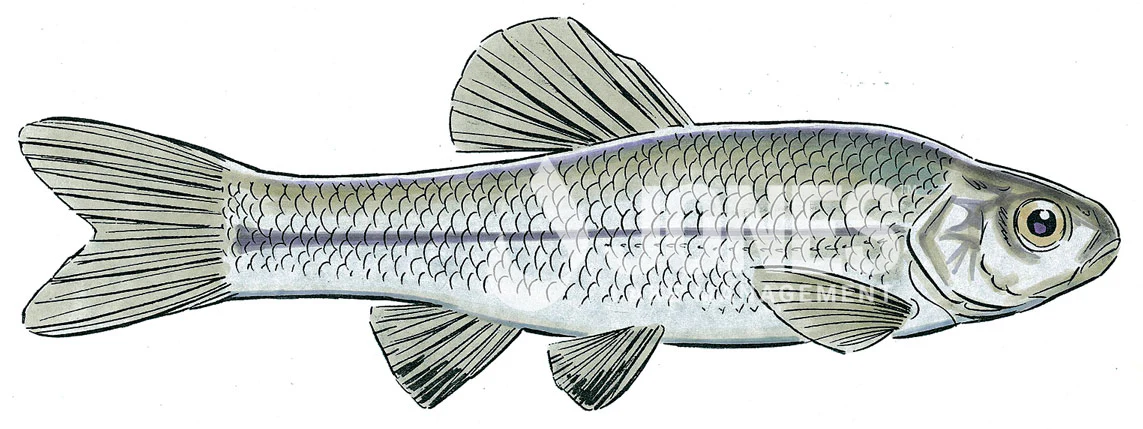
FATHEAD MINNOWS (Pimephales promelas) play an important role in supporting the larger fish you love to catch, like largemouth bass, black crappie and channel catfish. They provide a reliable food source, helping your predators grow faster and alleviating pressure on the bluegill population. Increased food availability reduces competition and can lead to faster growth rates for predators.
ALIAS: Tuffy, blackhead minnow, minner
IDENTIFICATION: Stout, chubby; back tan to olive; sides silvery to brassy, with dark caudal spot. Breeding males grayish-black with pale fleshy pad behind head; pale below dorsal fin. Snout blunt; mouth nearly terminal, oblique. Fins low, rounded; first dorsal fin ray short, splintlike; 7 anal fin rays. Lateral line incomplete; 42-48 scales in lateral series; scales behind head crowded.
DIET: Primarily algae and other plant matter, but will eat insects and copepods.
HABITAT: Clear pools of creeks, shallow ponds, and lakes over sand, gravel, or mud.
SPAWNING: As fractional spawners, fathead minnows spawn throughout the spring and summer once water temperatures reach 64°F. Females spawn multiple times between spring and fall. Their reproductive rate makes them an excellent stocking choice.
TIPS: A twice per year supplemental stocking is recommended.
USE: Available East & West Slope
Learn More
Bluegill Sunfish
Close
Bluegill Sunfish
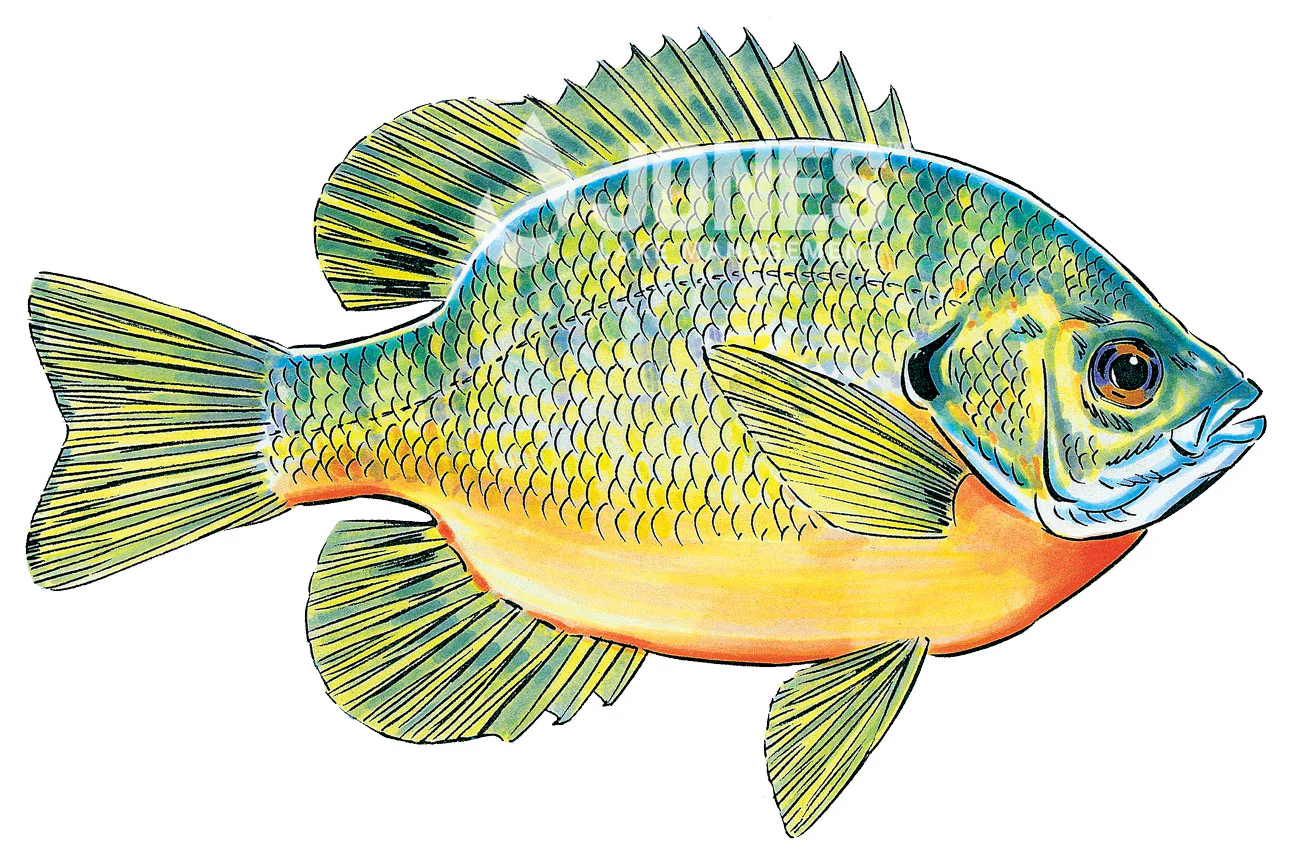
BLUEGILL SUNFISH (Lepomis macrochirus) are stocked in lakes and ponds to provide a reliable food source for larger fish species like largemouth bass and channel catfish. They are popular due to their abundance, ease of fishing, and quick growth, making them ideal for recreational anglers. Their presence also supports a healthy food chain, ensuring sustainable fishing opportunities.
ALIAS: Bream, brim, sun perch, copperbelly
IDENTIFICATION: Deep, compressed, profile rounded under dorsal fin; body and median fins dark olive-green; sides lighter, olive with brassy reflections, often with dusky bars; belly whitish. Mouth terminal, not extending past front edge of eye; opercular flap broad, moderately long, dusky to black. Pectoral fin long, pointed; second dorsal fin with black blotch near middle of posterior rays; anal fin base about half length of dorsal fin base. Lateral line complete. 39-45 scales.
DIET: Insects, small fish, leeches, snails, zooplankton, and algae.
HABITAT: Clear, warm pools of streams, lakes, ponds, sloughs, and reservoirs, usually in shallow water with vegetation.
SPAWNING: May through mid-summer when water temperatures are 65-85°F. Nests are constructed in 1 to 4’ of water on firm sand and gravel bottoms.
FISHING TIPS: Live bait such as red worms, meal worms and fathead minnows on a small hook work great in catching these slab-sized fish throughout the spring and summer.
USE: Available East & West Slope; West Slope – CPW Authorization Required
Learn More
Largemouth Bass
Close
Largemouth Bass
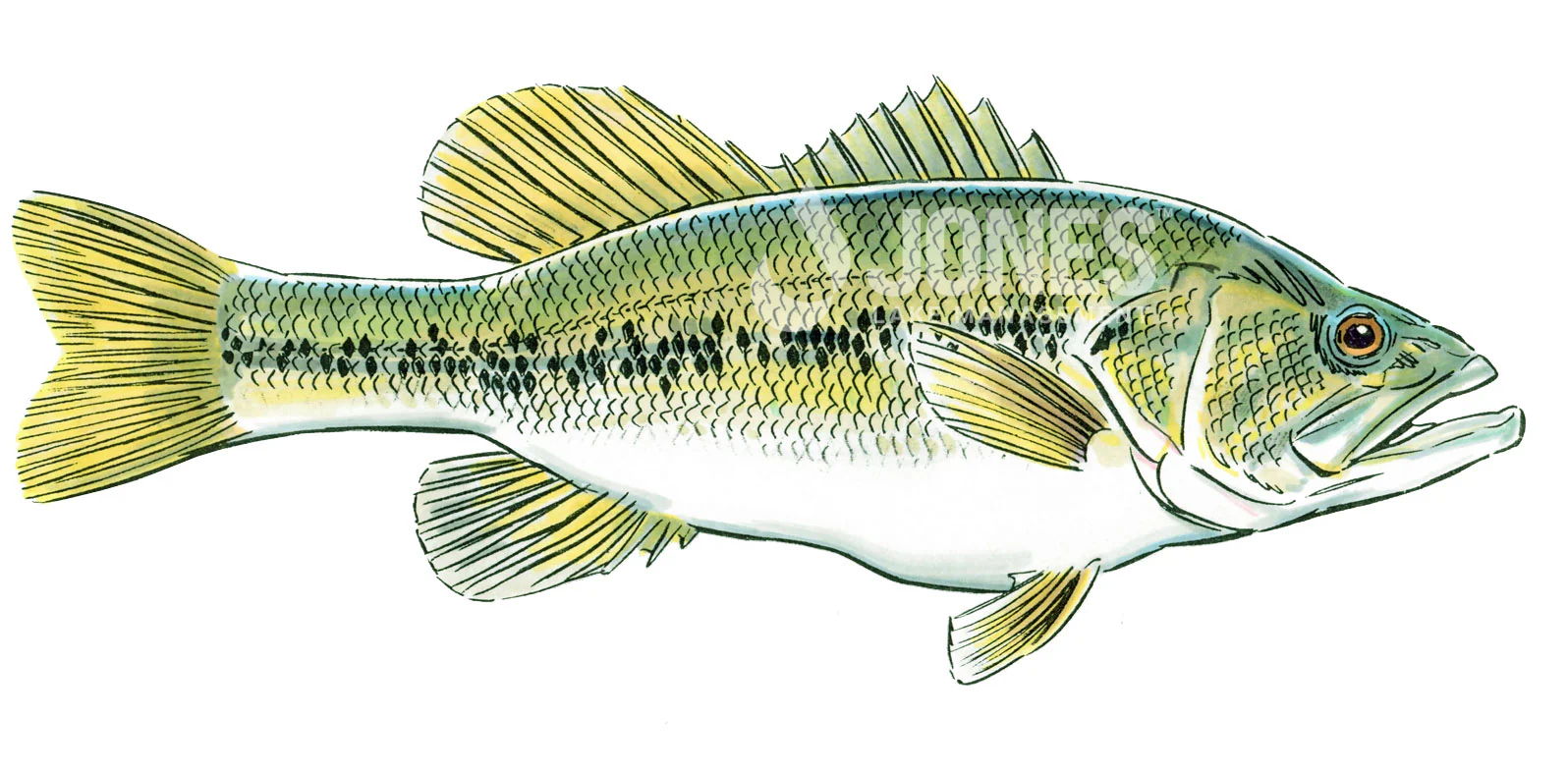
LARGEMOUTH BASS (Micropterus nigricans) are a top predator in lakes and ponds, helping maintain balanced ecosystems by controlling populations of smaller fish. These fish are popular for their strong fighting ability, making them a favorite among anglers. Stocking largemouth bass in lakes and ponds enhances recreational fishing opportunities and contributes to a thriving aquatic ecosystem.
ALIAS: Black bass, green trout, bucketmouth, bigmouth bass, widemouth bass
IDENTIFICATION: Moderately deep, robust; back olive to dark green, mottled; sides greenish yellow with dark midlateral stripe; head greenish gold. Mouth large, extends beyond posterior edge of eye. 14-15 pectoral soft rays; median fins olive; dorsal fins almost separate, 10 spines, 12-13 soft rays; 3 anal fin spines, 11 soft rays. Lateral line complete, 59-77 scales; 7-9 scale rows above lateral line, 14-17 below; no scales on bases of soft dorsal and anal fins; 24-28 caudal peduncle rows.
DIET: Small fish, frogs, crayfish, insects, and leeches.
HABITAT: Quiet, clear to slightly turbid streams, ponds, lakes, and reservoirs, often with vegetation.
SPAWNING: Late January or February when water temperatures reach 62°F. Males construct nests in 2 to 4’ of water on sandy or gravely bottoms.
FISHING TIPS: Natural and artificial baits work well with casting or spinning gear. Best fishing months are May, June and July.
USE: Available East & West Slope; West Slope – CPW Authorization Required
Learn More
Triploid Grass Carp 8-10"
Close
Triploid Grass Carp 8-10"
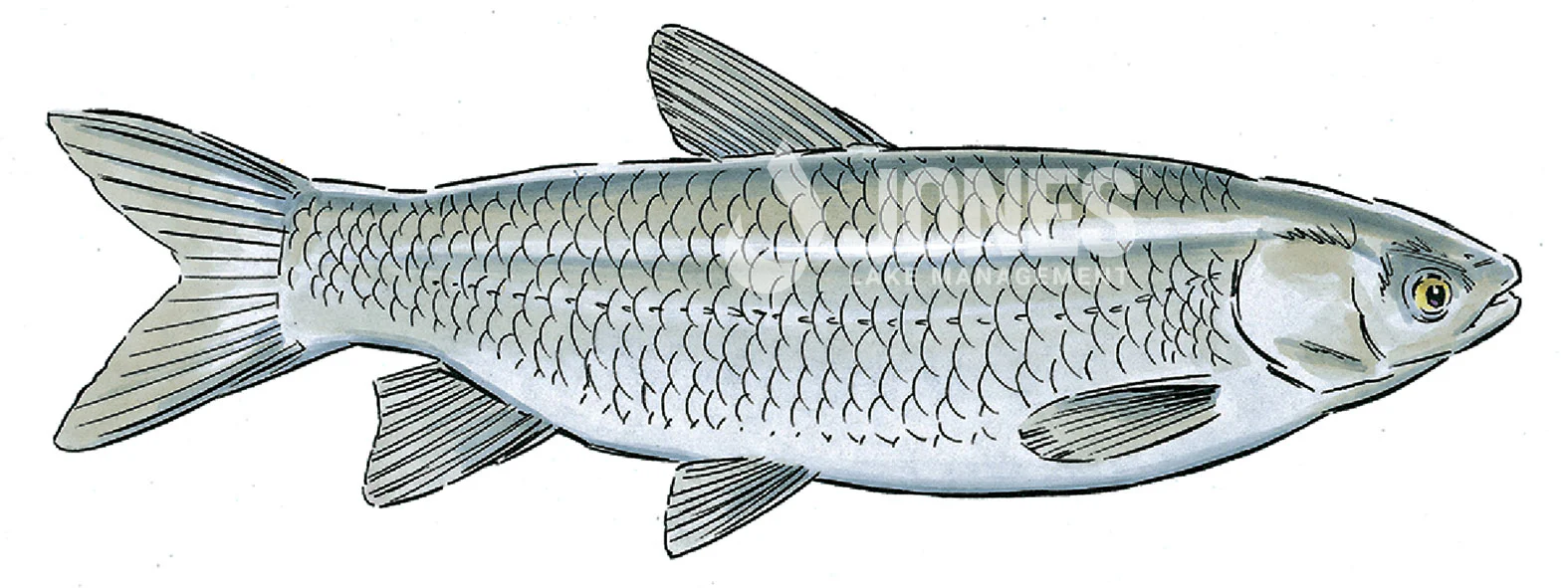
TRIPLOID GRASS CARP 8-10″, 12+” (Ctenopharyngodon idella) are commonly stocked in lakes and ponds to control excessive aquatic vegetation. Techniques to create sterile fish allow pond owners to effectively manage vegetation without risking the environmental harm that can come from an uncontrolled, breeding population of grass carp.
HISTORY: Grass carp are a member of the minnow family. Though native to river systems of Asia, they have been introduced worldwide as a food fish and for aquatic vegetation management. They feed on vegetation in shallow waters and are highly tolerant of a large temperature range. These fish were imported to the United States in 1963 to aquaculture facilities in Alabama and Arkansas as a biological control for aquatic plants. Concerns over their impact on native ecosystems led to the development of non-reproductive fish.
Sterile fish are developed by subjecting the eggs to heat or pressure. The stress causes the cells to retain a third set of chromosomes, instead of the normal two sets. This extra set of chromosomes renders these fish sterile. The U.S. Fish and Wildlife Service tests fish from each lot of triploid fish to certify them as triploid.
ALIAS: Sterile grass carp, triploid white amur
IDENTIFICATION: Robust; back olive-brown, sides silvery, belly whitish; upper scales outlines with dusky pigment giving crosshatched appearance. Snout short; head blunt, broad. Dorsal fin with 8-19 rays, origin over pelvic fin insertion; anal fin with 8-9 rays, origin nearer caudal fin base than dorsal fin origin; fins olive to dusky; caudal peduncle short, deep. Lateral line complete, 40-42 scales.
DIET: Aquatic vegetation, including filamentous algae.
HABITAT: Rivers and large creeks, but adaptable to ponds and reservoirs.
SPAWNING: Triploid grass carp are certified sterile by the U.S. Fish and Wildlife Service and will not reproduce.
TRIVIA: Ohio legalized the sale of triploid grass carp in 1988.
USE: Available East & West Slope – Area Dependent; Call to Confirm Pricing & Availability
Triploid Grass Carp (sterile) — used for aquatic vegetation control; requires a Texas Parks & Wildlife permit
Learn More
Walleye
Close
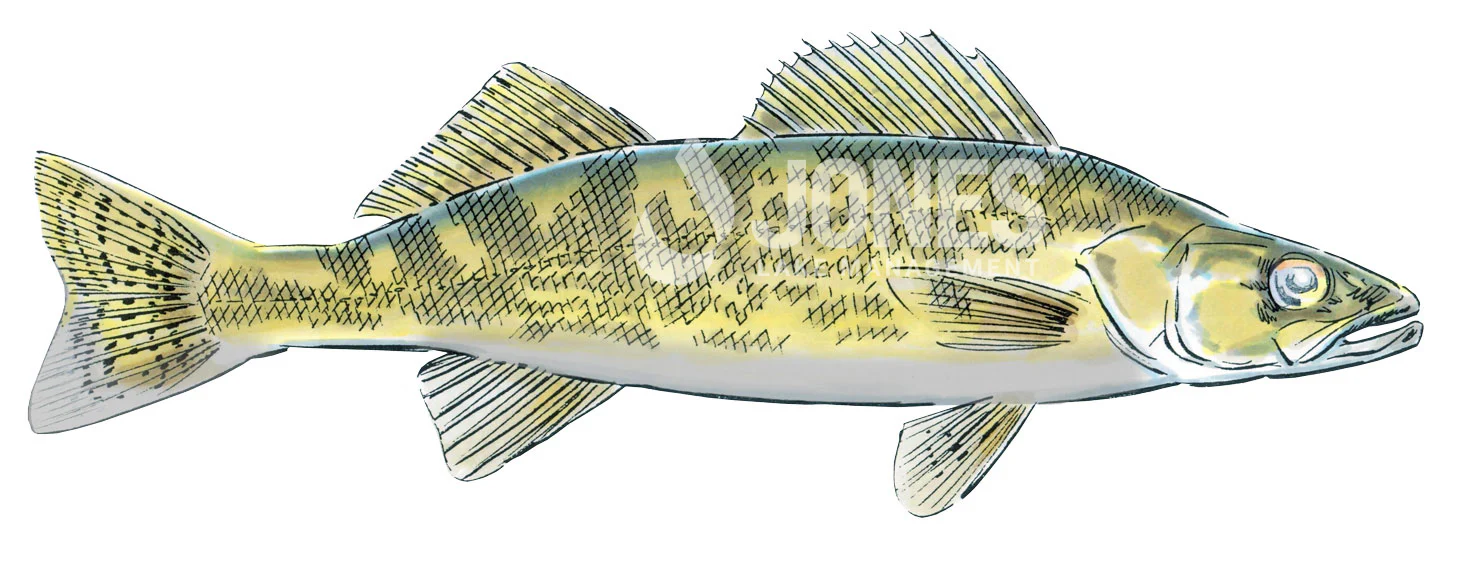
Walleye
WALLEYE (Sander vitreus)
ALIAS: Walleyed pike, walleyed pickerel
IDENTIFICATION: Elongate, slightly compressed; olive-brown to brassy greenish-yellow above with dusk to black mottlings, belly whitish with yellow-green tinge. Mouth extends to eye, has canine teeth; preopercle serrate. Dorsal fins separate; first dorsal fin dusky with black edge, black blotch on membranes of last 2-3 spines; caudal fin forked, tip of lower lobe white. Lateral line complete, 82-92 scales.
DIET: Mainly small fish such as juvenile Yellow Perch, White Suckers, Rainbow Smelt and various minnows, depending on forage base and opportunity; also eats insects, crayfish, leeches, and other small prey.
HABITAT: Deep waters of large streams, lakes, and reservoirs over firm sand, gravel, or rocks.
SPAWNING: March to April when water temperatures are 40-50̊ F. Unfortunately, due to the absence of running water and a properly sized aggregate, walleye usually do not spawn in ponds.
FISHING TIPS: Jigs tipped with fathead minnows or night-crawlers are ideal lures for walleye. They are often caught in the pre-dawn and dusk on cloudy days.
USE: Available East Slope (East of Continental Divide); West Slope – CPW Authorization Required; Call to Confirm Pricing & Availability
Walleye not suggested for ponds reaching 80+ degrees in summertime.
Learn More
Smallmouth Bass
Close
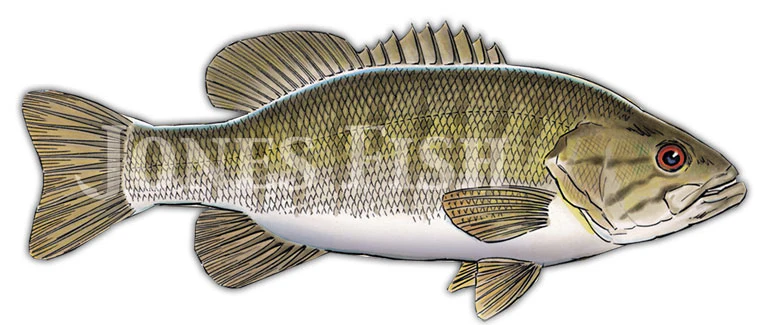
Smallmouth Bass
SMALLMOUTH BASS (Micropterus dolomieu)
ALIAS: Bronzeback, brownie, smallie, bronze bass
IDENTIFICATION: Elongate, compressed; back dark olive to brown, sides greenish yellow with bronze reflections, diffuse midlateral bars form dark mottlings. Mouth extends to eye. 16-18 pectoral soft rays; median fins olive; dorsal fins joined, 10 spines, 13-14 soft rays; 3 anal fin spines, 11 soft rays. Lateral line complete, 67-79 scales; 11-13 scale rows above lateral line, 20-23 below; scales on bases of soft dorsal and anal fins; 29-31 caudal peduncle scale rows.
DIET: Crayfish, small fish (such as chubs, sculpins, stonerollers, darters, and suckers), insects, and frogs.
HABITAT: Cool, clear streams with moderate to swift current over gravel and rocks; lakes and reservoirs.
SPAWNING: Early-March to mid-May when water temperatures are 55-65̊ F. Nests are constructed in 1 to 4’ of water on firm sand and gravel bottoms.
FISHING TIPS: Artificial lures and live baits such as crayfish and fathead minnows are popular for smallmouth bass in the late spring.
USE: Available East Slope Only; Call to Confirm
**MINIMUM: 25 FISH**
Learn More
Yellow Perch
Close
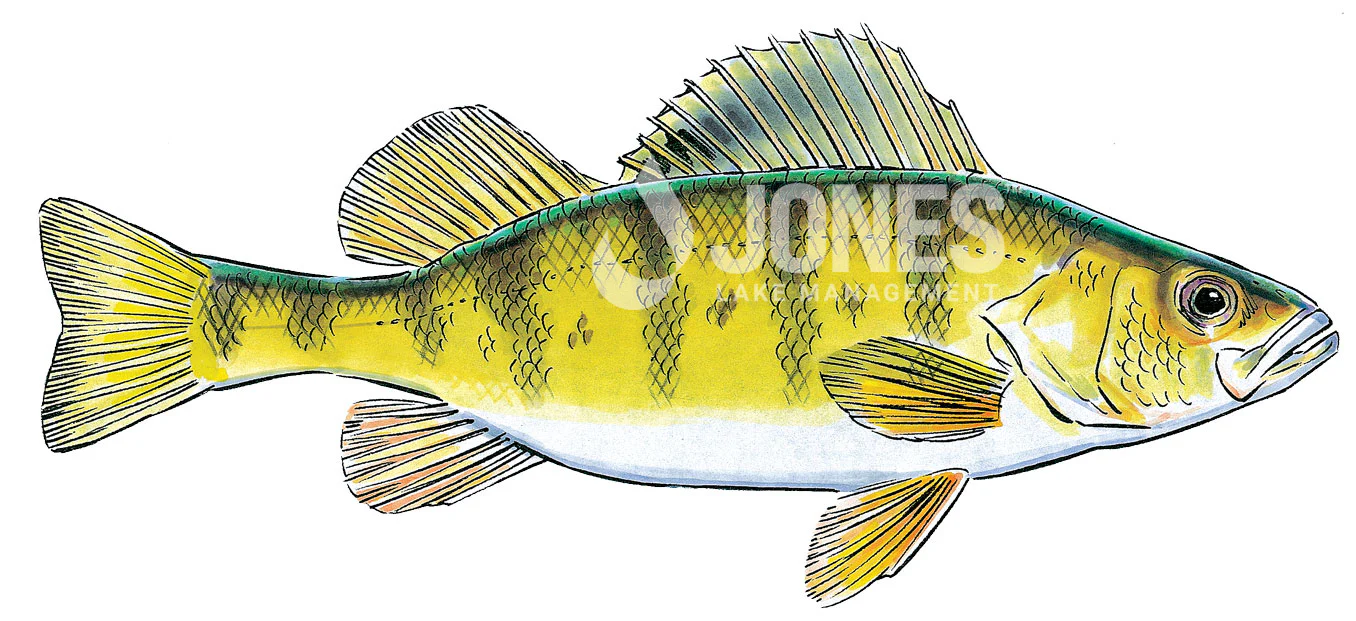
Yellow Perch
YELLOW PERCH (Perca flavescens) are an excellent way to add variety to your fishery. Though commonly found in large lakes, they thrive in small ponds throughout the Midwest and can be fished for year-round. Juvenile yellow perch commonly school together seeking food and safety. This schooling behavior means you’ll often catch several fish in quick succession. Not only is this popular sport fish fun to catch – it’s also excellent table fare. Because yellow perch are active year-round, they’re a great species for ice fishing.
Yellow perch readily take floating fish food pellets. Supplementing their diets with fish food not only increases their growth rates but also the number of fish your pond or lake can support. As they grow, their diet transitions from aquatic invertebrates to small fish. Supplemental stockings of fathead minnows and golden shiner minnows are necessary to support the perch and other predators in your pond or lake. Stock yellow perch today for a strong fighting, easy to catch and tasty fish.
ALIAS: Lake perch, ringed perch, American perch, raccoon perch, ring-tailed perch
IDENTIFICATION: Oblong, moderately compressed; brassy green to golden yellow above with 5-8 dusky bars across back almost to belly. Mouth extends to middle of eye; no canine teeth; preopercle serrate. Dorsal and caudal fins dusky to olive; pelvic and anal fins light grayish green to reddish orange; dorsal fins separate; 2 anal fin spines, 6-8 soft rays. Lateral line complete, 53-59 scales; cheek and opercle scaled.
DIET: Small fish, insects, snails, leeches and crayfish.
HABITAT: Open areas in streams, lakes, ponds, and reservoirs with clear water and aquatic vegetation.
SPAWNING: Mid-March to early-May when water temperatures are 50-60°F. They lay long egg strands onto submerged structure; no parental care is provided
FISHING TIPS: Perch are most often caught in the spring and fall using fathead minnows, golden shiner minnows and night crawlers fished near the bottom.
USE: Available East Slope (East of Continental Divide); West Slope – CPW Authorization Required; Call to Confirm Pricing & Availability
Yellow Perch not suggested for ponds reaching 80+ degrees in summertime.
Learn More
Black Crappie
Close
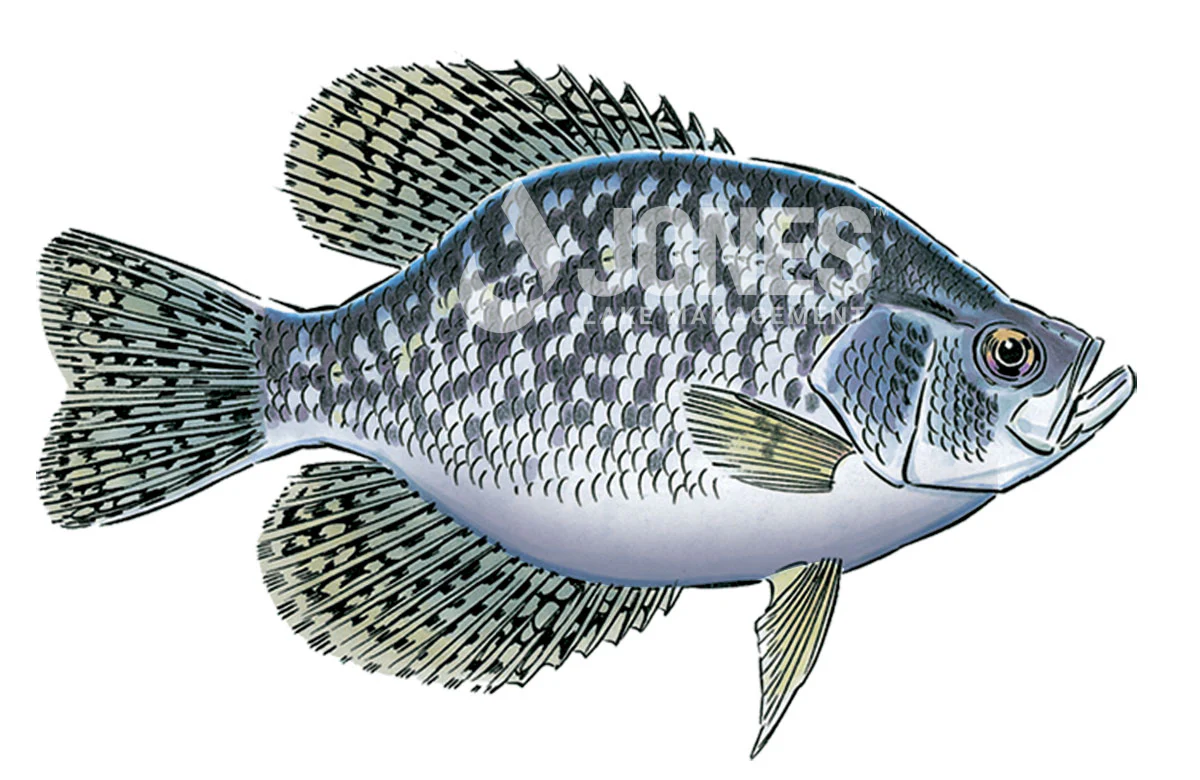
Black Crappie
BLACK CRAPPIE (Pomoxis nigromaculatus)
ALIAS: Papermouth, speck, calico bass
IDENTIFICATION: Deep, strongly compressed, dorsal profile rounded; back greenish, sides silvery green with dark green to black scattered mottlings not forming bars, belly silvery, median fins yellowish green with dusky, wavy lines and white spots. Head long, concave near eye; mouth oblique, extends past middle of eye. Dorsal fins connected without notch, 7-8 spines; anal fin large, 6 spines. Lateral line complete, 36-44 scales.
DIET: Small fish, aquatic insects, and zooplankton.
HABITAT: Quiet, warm, clear streams, ponds, lakes, and reservoirs.
SPAWNING: When water temperatures are 60-65°F, black crappie broadcast their eggs onto shallow submerged structures.
FISHING TIPS: Live baits such as fathead minnows or small jigs tipped with fathead minnows work well. Target submerged brush and stumps.
USE: Available East Slope (East of Continental Divide); West Slope (West of Continental Divide) – CPW Authorization Required
Learn More
Rainbow Trout (Delivery Only)
Close
Rainbow Trout (Delivery Only)
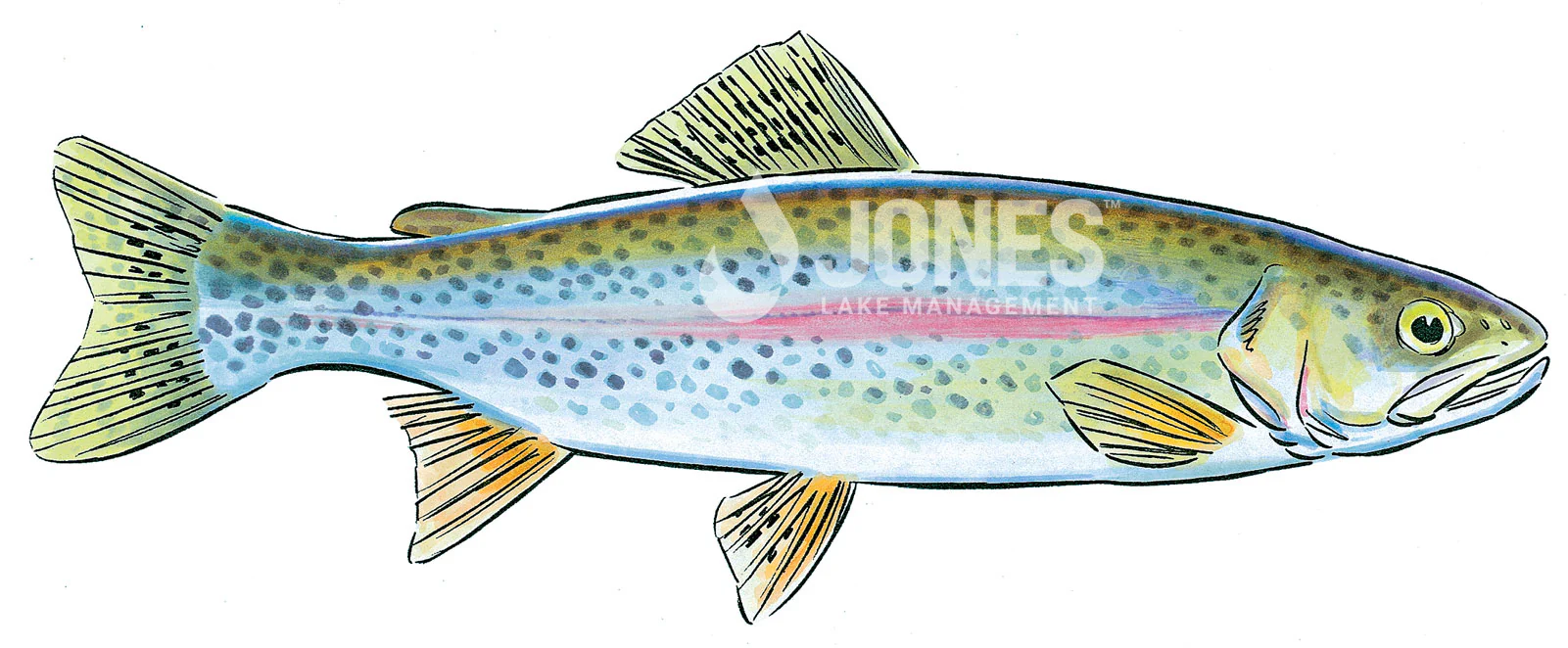
RAINBOW TROUT (Oncorhynchus mykiss)
ALIAS: Steelhead
IDENTIFICATION: Elongate, fusiform. Spots more prominent, distinctive red band on sides. Mouth white; no teeth on back of tongue. 8-12 anal fin rays; adipose fin present, usually with black edge.
DIET: Insects (nymphs, mayflies, caddisflies, midges, etc.), Crustaceans (crayfish, freshwater shrimp, scuds), Small Fish (minnows, sculpins), and Zooplankton.
HABITAT: Spawns in freshwater streams and rivers; can inhabit ponds, lakes, and reservoirs but will not reproduce.
SPAWNING: Natural reproduction in ponds throughout the Midwest typically does not occur. Fish should be stocked and harvested in the spring and fall. Rainbow trout will not generally survive in waters greater than 72̊ F.
FISHING TIPS: Fishing with spoons and jigs tipped with worms, fish eggs and fathead minnows are effective methods for catching rainbow trout.
USE: Available East & West Slope
**DELIVERY ONLY – 50 POUND MINIMUM ORDER**
Learn More
Mosquitofish
Close
Mosquitofish
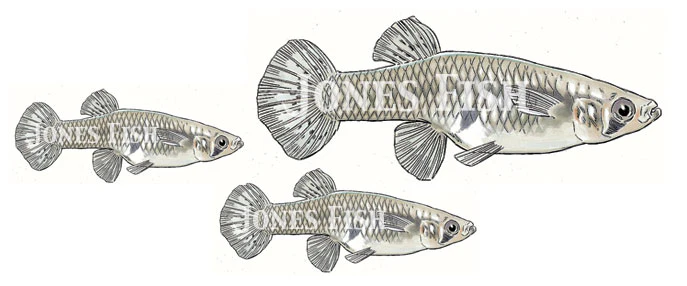
MOSQUITOFISH (Gambusia spp.) can help naturally control mosquito populations. These minnows feed on mosquito larvae and small invertebrates, and can adapt to a variety of water conditions.
ALIAS: Skeeter eater
IDENTIFICATION: Small, elongated livebearer with a rounded belly and upturned mouth. Body generally gray to olive with darker scale margins; females often show a dark gravid spot near the rear of the abdomen. Single soft-rayed dorsal fin set well behind midbody; rounded caudal fin; no adipose fin. Males smaller with an elongated, modified anal fin (gonopodium); females larger with a normal fan-shaped anal fin.
DIET: Mosquito larvae & pupae, Aquatic insects (midges, mayflies, small insect larvae), Zooplankton (copepods, cladocerans), Small crustaceans (amphipods, ostracods), Fish eggs & fry, and Algae/detritus (occasionally)
HABITAT: Inhabits shallow, warm, slow-moving or still waters including ponds, lakes, wetlands, ditches, canals, and stream margins; prefers areas with aquatic vegetation and protected shoreline habitat. Highly tolerant of warm temperatures, low dissolved oxygen, and variable water quality; reproduces readily in suitable freshwater habitats.
SPAWNING: Mosquitofish bear live young and reproduce every three to four weeks.
USE: Mosquitofish have been stocked worldwide in an attempt to control mosquito larvae, especially in areas where malaria, yellow fever and West Nile virus are found.
Available East Slope Only; Call to Confirm
Learn More
Hybrid Striped Bass
Close
Hybrid Striped Bass
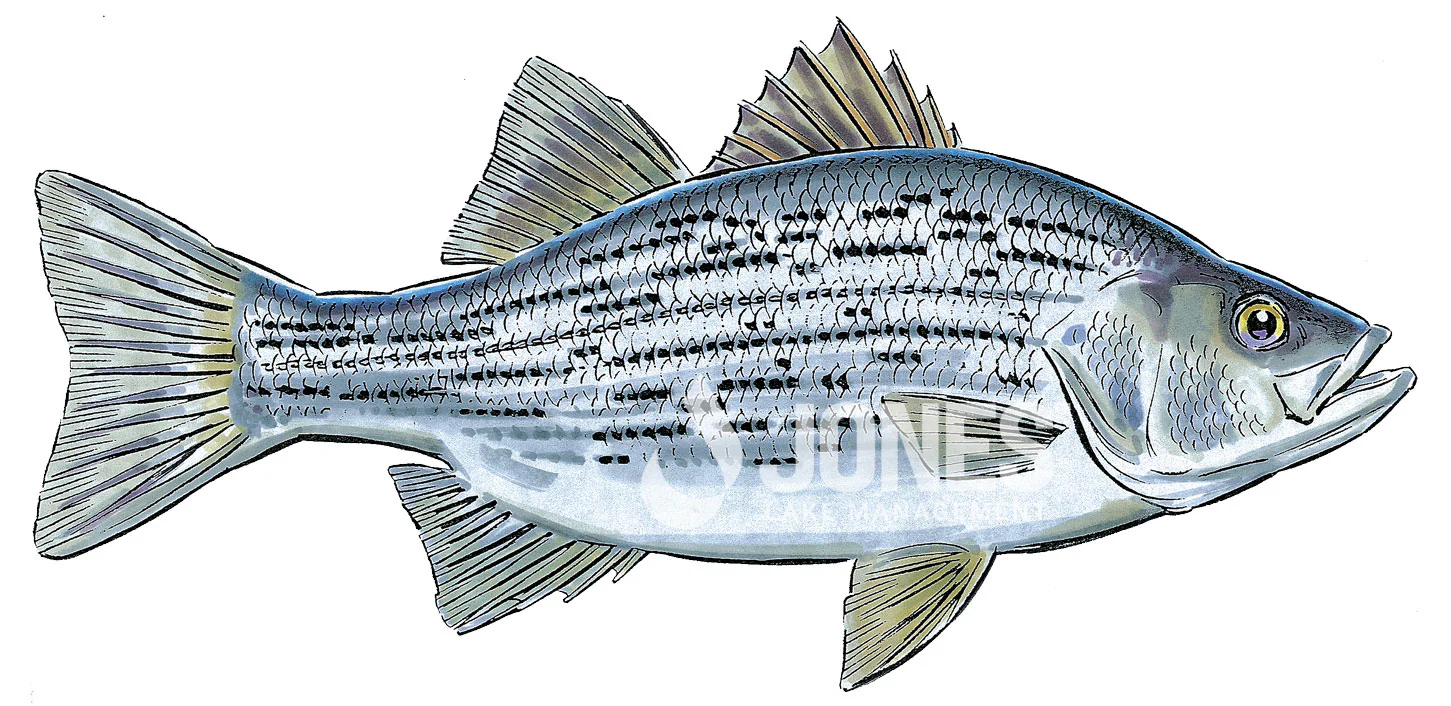
HYBRID STRIPED BASS (Morone saxatilis x Morone chrysops) are popular for stocking in lakes due to their fast growth and strong fighting ability, making them a favorite among anglers.
ALIAS: Wiper, striper, white rock bass
IDENTIFICATION: Deep-bodied, laterally compressed, silvery fish with a dark gray to blue-black back and white belly. Several dark horizontal stripes extend along the sides; stripes are typically broken or irregular, distinguishing them from striped bass. Two separate dorsal fins; first dorsal with sharp spines and second soft-rayed. Large mouth with tooth patches on the tongue; deeply forked caudal fin.
DIET: Fish such as shad, sunfish and silversides; also insects and crustaceans.
HABITAT: Large, warmwater reservoirs and rivers with abundant forage base of small fish.
SPAWNING: Hybrid striped bass cannot successfully spawn; fish must be re-stocked over time.
FISHING TIPS: Crank baits and live baits such as nightcrawlers and baitfish are effective for hybrid striped bass. Since they are a schooling fish, bites often come fast and furious.
USE: Available East Slope Only; Call to Confirm
Learn More
Channel Catfish
Close
Channel Catfish
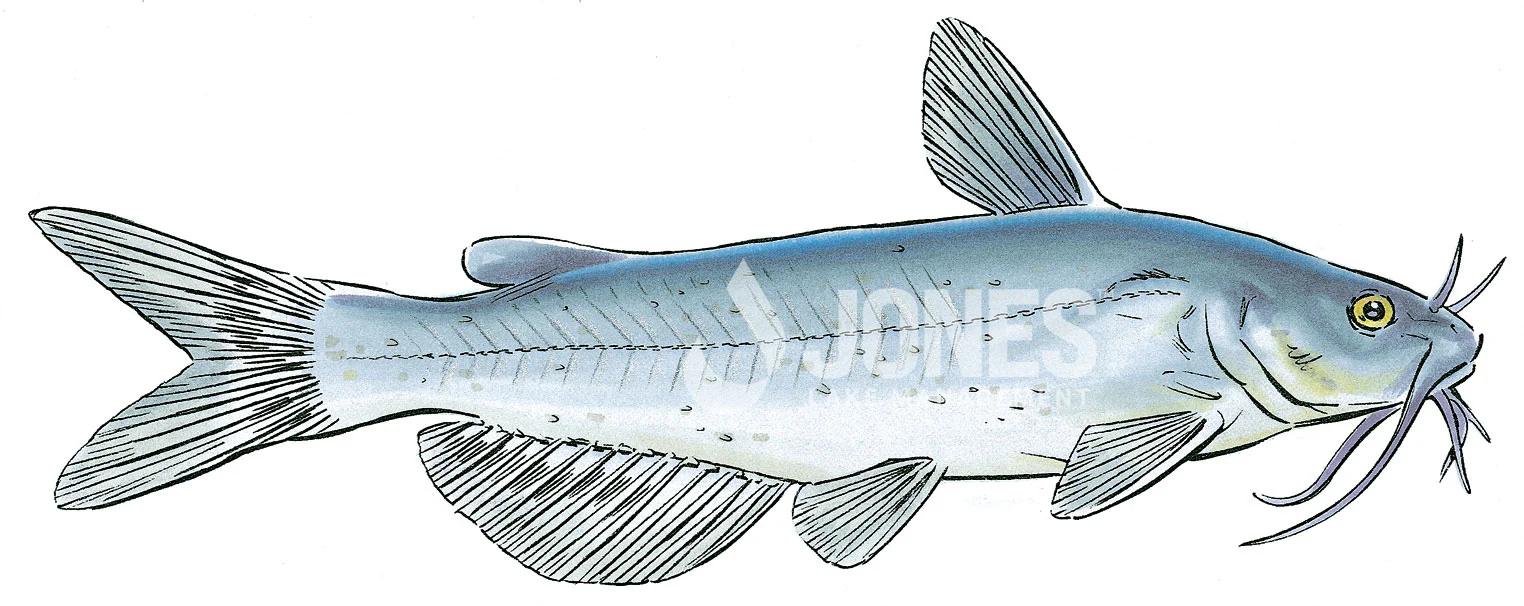
CHANNEL CATFISH (Ictalurus punctatus) are commonly stocked in ponds and lakes for recreational fishing due to their rapid growth, large size, and strong fighting ability, which make them popular among anglers.
ALIAS: Spotted cat, fork tail, speckled, fiddler
IDENTIFICATION: Slender; back blue-gray; sides light blue to silvery with scattered dark olive to black spots; belly white; fins olive to dusky. Head wide, flat to slightly rounded above; eyes large, above midline of head; upper jaw overhangs lower; 4 pairs of barbels. Adipose fin present; outer edge of anal fin rounded, 24-31 rays; caudal fin deeply forked.
DIET: Insects, crustaceans, fish, some plant matter.
HABITAT: Rivers and large creeks in slow to moderate current over sand, gravel, or rocks; ponds, lakes, and reservoirs.
SPAWNING: Late-May to July when water temperatures are 70-75°F. Nests are constructed in natural cavities and overhangs.
FISHING TIPS: Being a bottom feeder, catfish are often caught on nightcrawlers, chicken livers, sunfish, fathead minnows and golden shiner minnows. They feed most actively at night and in the early morning.
USE: East Slope Only; Call to Confirm
Learn More
Redear Sunfish
Close
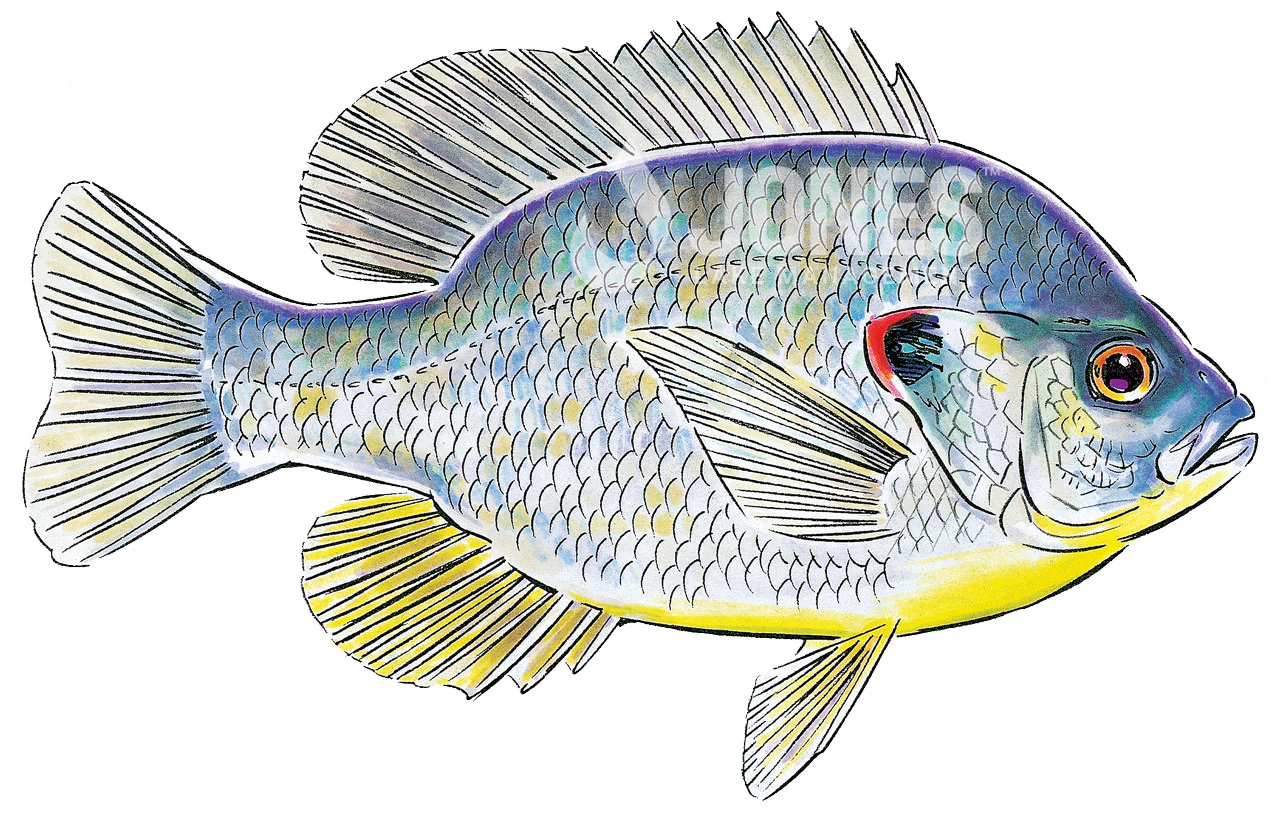
Redear Sunfish
REDEAR SUNFISH (Lepomis microlophus) are often stocked in lakes and ponds to help control mollusk populations, particularly snails. They are also popular among anglers for their strong fight and valuable size, making them a sought-after species for recreational fishing.
ALIAS: Shellcracker, stump knocker, yellow bream, cherry gill, chinquapin
IDENTIFICATION: A deep sided fish with a black ear flap rimmed in red or orange. Specially modified teeth in the throat allow them to crack mollusk shells.
DIET: Snails and other mollusks are preferred, but diet also consists of crayfish, insects, insect larvae and fathead minnows.
HABITAT: Redear sunfish prefer freshwater lakes, ponds, and slow-moving rivers with clear water and sandy or gravelly bottoms. They are commonly found near submerged structures like rocks and vegetation. These fish thrive in areas with moderate clarity and temperatures.
SPAWNING: Mid-May through mid-summer when water temperatures are above 65°F. Nests are constructed in 1 to 4’ of water on firm sand and gravel bottoms.
FISHING TIPS: Live baits such as red worms, wax worms and fathead minnows work best.
USE: NOT RECOMMENDED IN COLORADO – East Slope Only; Call to Confirm
Learn More
Specklebelly Sunfish
Close
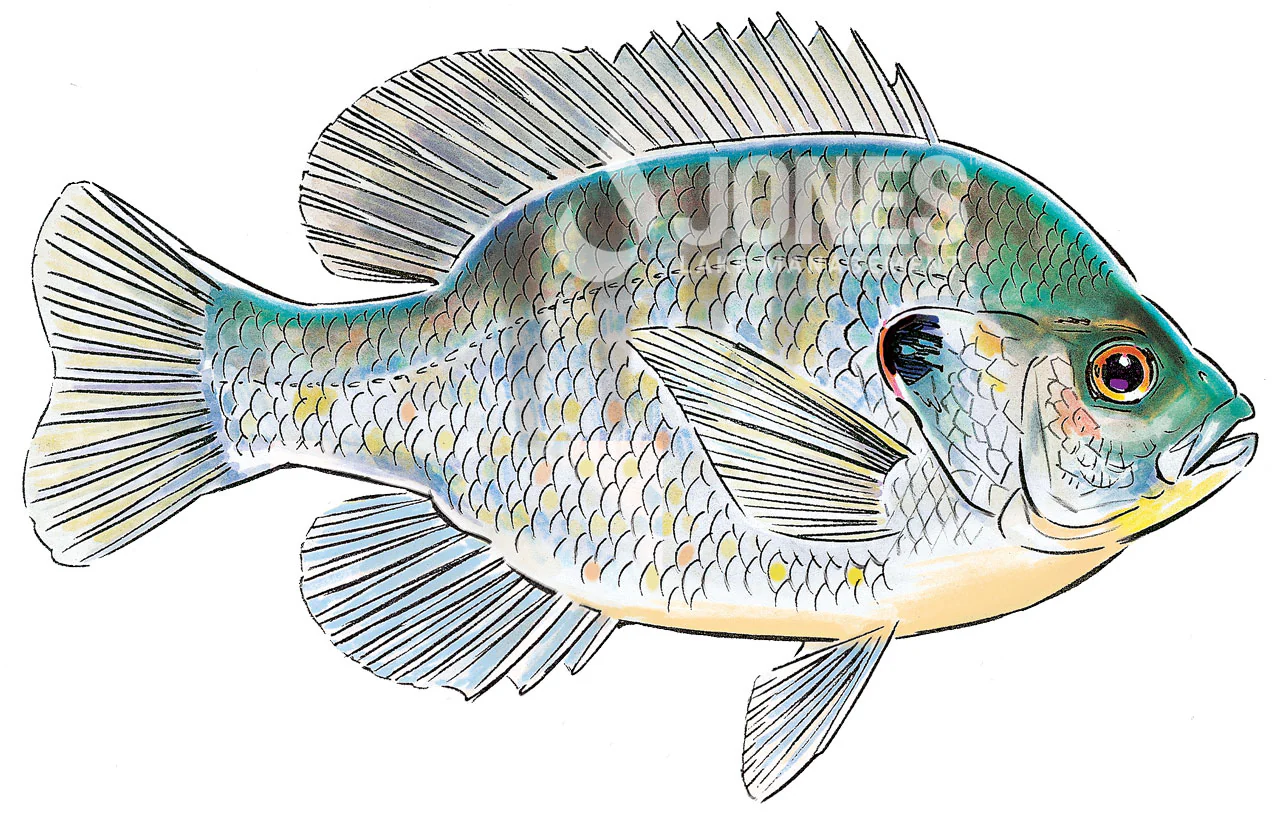
Specklebelly Sunfish
SPECKLEBELLY SUNFISH (Lepomis spp.) are a great way to add diversity to your sunfish population. These sunfish readily take a commercial fish food, grow to large sizes and are easy to catch.
IDENTIFICATION: Specklebelly are deep sided fish a small mouth, a black ear flap rimmed in reddish orange and bluish vertical bars.
BIOLOGY: Specklebelly are an improved proprietary hybrid sunfish that does not use green sunfish in its cross. Populations of specklebelly are approximately 95-100% male. Restocking will be necessary to maintain a population over time.
USE: NOT RECOMMENDED IN COLORADO – Call to Confirm
Learn More
Hybrid Bluegill
Close
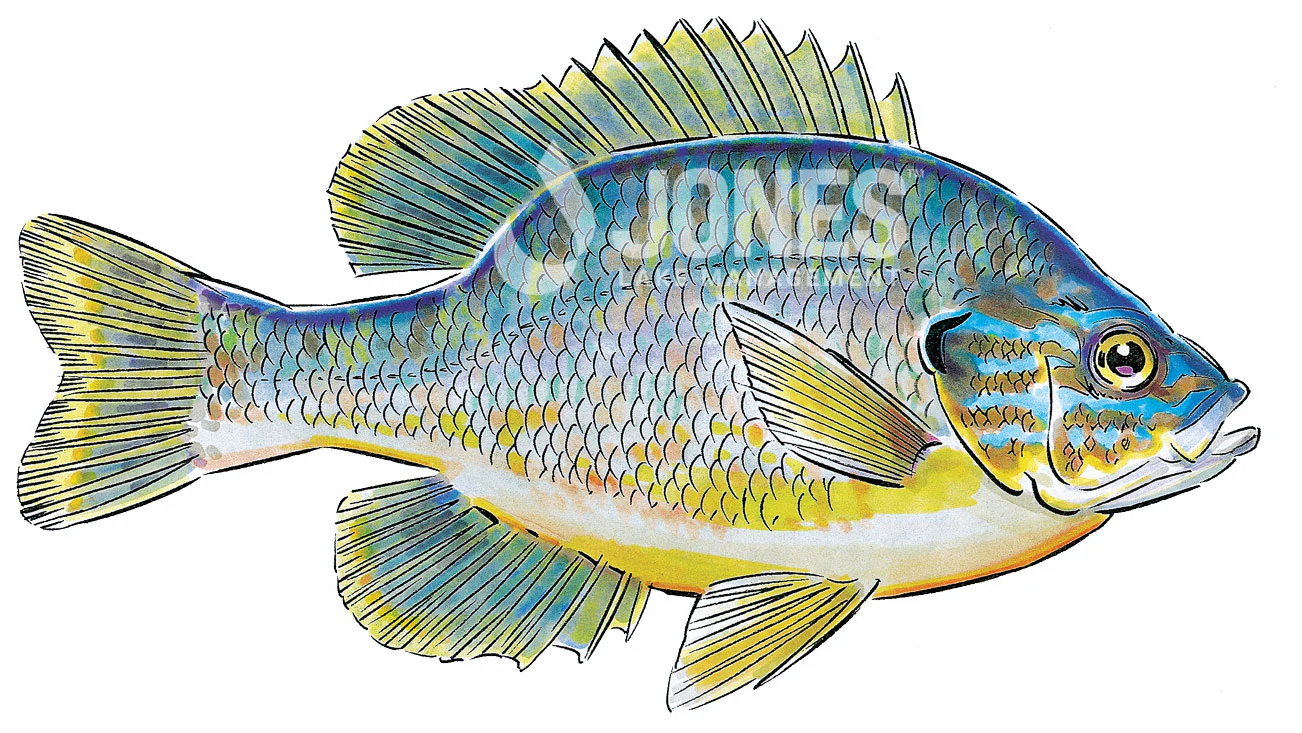
Hybrid Bluegill
HYBRID BLUEGILL (Lepomis cyanellus x Lepomis machrochirus) thrive in freshwater ponds and lakes with plenty of food and cover, such as submerged vegetation. They grow rapidly, but have limited reproductive success due to a mostly male population, requiring regular restocking. These fish are often stocked in ponds with minimal competition and managed feeding systems.
ALIAS: Gill, bream, brim
IDENTIFICATION: Has a larger mouth than a bluegill with yellow margins along the pelvic and anal fins.
DIET: Insects, insect larvae, fathead minnows, small fish and commercial fish food.
SPAWNING: May to mid-June when water temperatures are 65-85°F. Nests are constructed in 1 to 4’ of water. Due to an excess proportion of males, minimal reproduction occurs.
FISHING TIPS: Live baits such as red worms, meal worms and fathead minnows on a small hook work great. Also, small artificial lures will often catch overly aggressive fish in the spring, making for quite the fight.
USE: NOT RECOMMENDED IN COLORADO – Call to Confirm